Demonstrate the subject
Let the article's own pacing and media treatment embody the design guidance it offers.
ShorthandVisual Content Guide
Shorthand demonstrates its subject through split heroes, full-bleed color fields, device scenes, and repeated Why it works analyses. On mobile, side-by-side and sticky compositions become an intentional image-then-explanation order, preserving narrative causality instead of desktop geometry.
Open the original article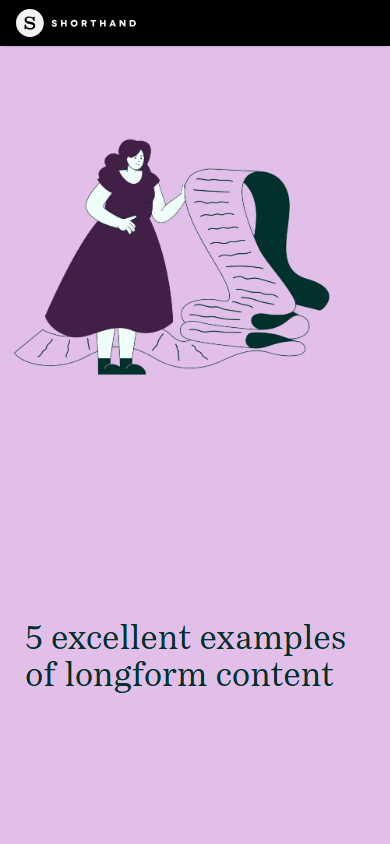
A persuasive meta-example that alternates narrow explanation with immersive showcase stages, then turns every visual chapter into a reusable rationale.
Responsive argument
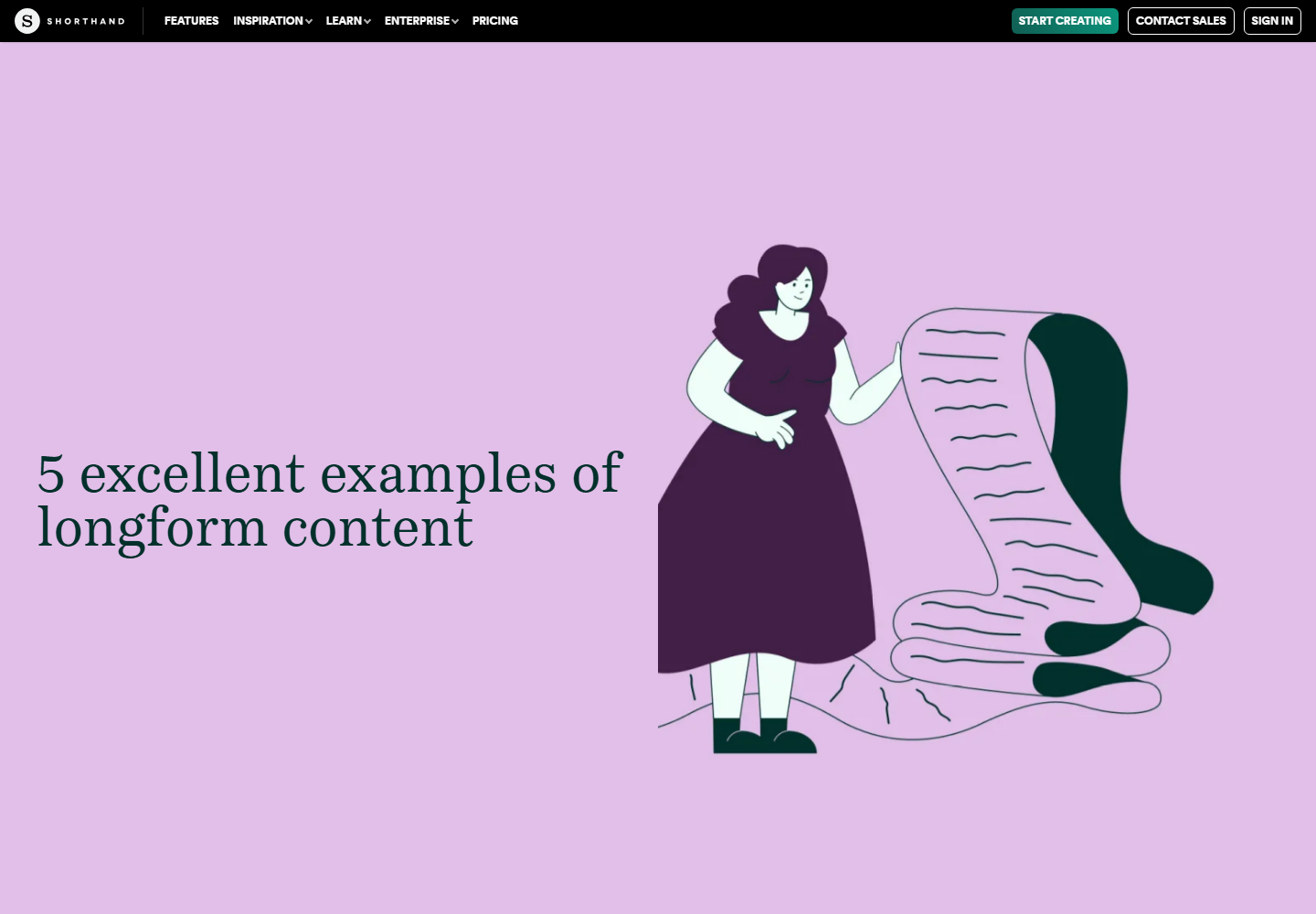
This evidence pair keeps the first viewport constant enough to compare hierarchy, media priority, and the cost of adaptation. Classification: recomposed.
Story anatomy
A compact black product bar sits above a lilac split hero with display headline and illustration.
Introductory myth-busting, byline, contents, and planning guidance establish the evaluation criteria.
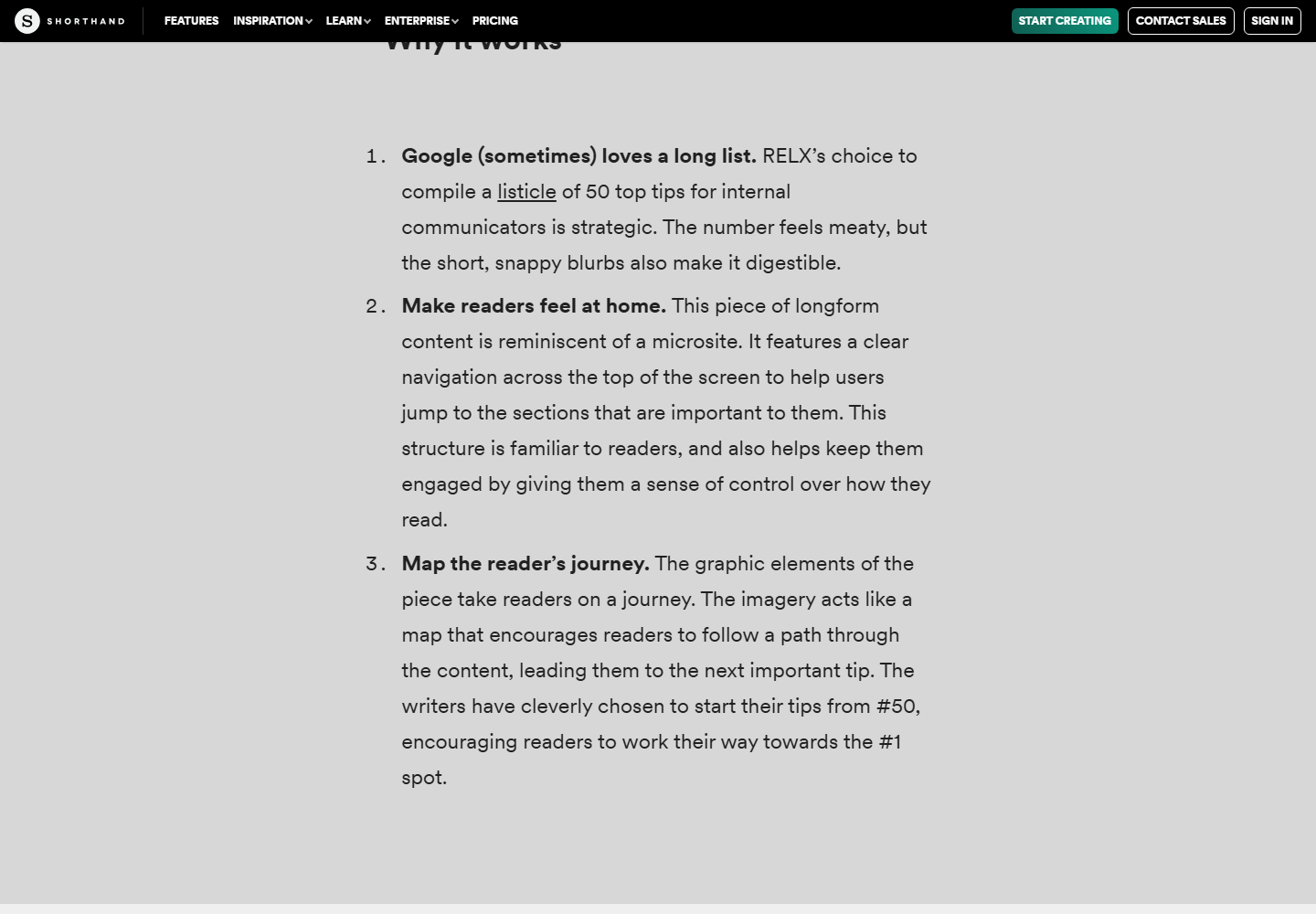
Each example receives a large media scene, short description, and numbered Why it works rationale.
Definitions and benefits convert the examples into practical guidance for creating longform work.
Related cards, newsletter, Top control, and Shorthand attribution close the article.
Viewport behavior

Design language
Reader utilities
Tradeoffs
Transferable patterns
Let the article's own pacing and media treatment embody the design guidance it offers.
Show a case, describe what the reader sees, then enumerate why it succeeds.
Alternate a disciplined prose measure with wide media to produce meaningful rhythm.
Recompose split scenes into the sequence that makes the argument easiest to follow.
Do not copy
Implementation
Read the dated learning file for the full observation log.
Full evidence

